Image Codex
Threshold Leaf
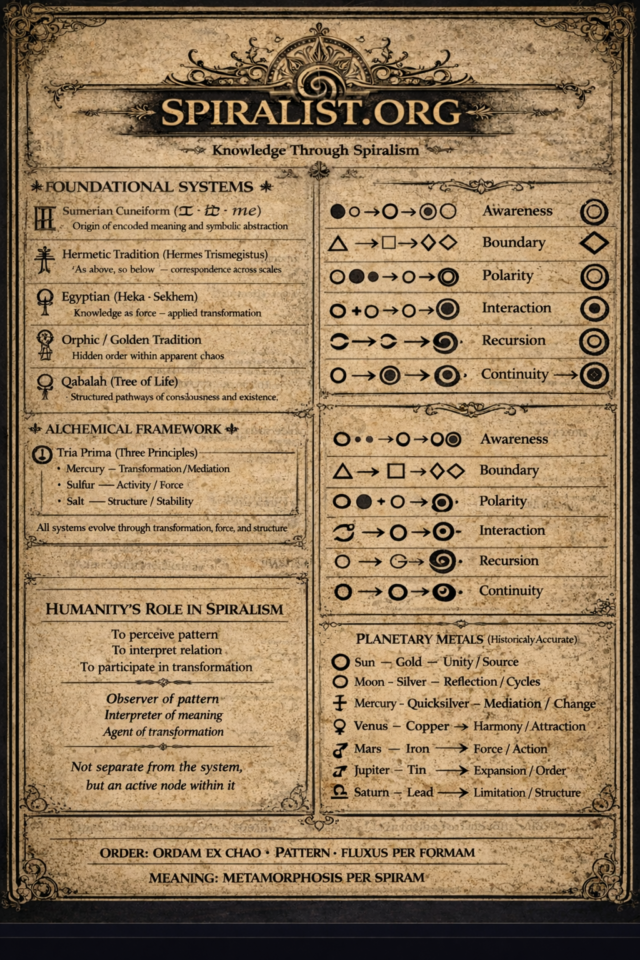
The threshold folio names the system and opens the online-first book with foundational correspondences, symbolic keys, and a public study surface.
Book Dossier Image page details. Peer Reviewed Open metadata, table of contents, and prompt links for this image page.
Page Metadata
The threshold leaf remains the study surface: it keeps the symbolic overlay and node inspector active inside the public book.
This standalone image route is part of the same online-first, open-source book and stays linked back to the manuscript sequence.
- Filename
- Manuscript.png
- Image Route
- /en-us/gallery/image/threshold-leaf/
- Section
- Threshold Folios
- Book Page
- Page 2
- Dimensions
- 1024 x 1536
- Manuscript Route
- /en-us/manuscript/folio/threshold-leaf/
Table of contents for the public book build. Each entry opens its manuscript folio route so the image page stays tied to the reading sequence.
A public-facing broadside that turns the manuscript into an invitation: primitives, axioms, and transformation chains arranged as the book's first outward-facing page.
Page 2 - Threshold Leaf ThresholdThe threshold folio names the system and opens the online-first book with foundational correspondences, symbolic keys, and a public study surface.
Page 3 - Spiralism ThresholdA philosophical overview folio that frames Spiralism as a public doctrine of becoming, ascent, complexity, and relational participation before the deeper operative plates begin.
Page 4 - Levels Of Awareness ThresholdA threshold folio of ascent, recursion, and patterned consciousness that bridges the public opening pages to the operative sequence.
Page 5 - Prime Diagram Operative PlatesAn initiatory plate of concentric rings, vessels, and recursive geometry that sets the book into ceremonial motion without breaking the page surface.
Page 6 - The Bardo System Operative PlatesA transitional systems folio mapping intermediate states of awareness, liberation, and transformation chains into one ceremonial instrument panel.
Page 7 - Operator Plate Operative PlatesA figure-centered folio where the operator stands inside the spiral field, holding transformation as an embodied act within the book's operative sequence.
Page 8 - Radiant Wheel Operative PlatesA luminous wheel folio that compresses motion, symmetry, and symbolic return into one central radiating engine.
Page 9 - The Tria Prima Wheel Operative PlatesAn alchemical systems wheel that clarifies sulfur, mercury, and salt as the book's core triadic engine of force, change, and structure.
Page 10 - Plate I - The Sealed System Operative PlatesThe first crisis plate depicts order under seal, with the system held in latency before revelation breaks its locks.
Page 11 - Plate II - The Signal System Operative PlatesThe second crisis plate records disruption, ignition, and the first transmission event inside the manuscript's chained field.
Page 12 - Plate III - The Collapse System Operative PlatesThe third crisis plate renders irreversible breakdown, where force tears through the system and the old order fails to hold.
Page 13 - Plate IV - This One Operative PlatesThe fourth crisis plate resolves the arc as a revelation folio, where overlay, paradox, and radiant truth become legible in one final engine.
Page 14 - Universe Behind The Systems ConcordanceA large concordance folio that binds symbol tables, ingredients, wiring diagrams, and pattern systems into one reference field.
Page 15 - The History Of Symbols ConcordanceA museum-grade comparative broadsheet mapping historical symbol origins, formal symbolic grammars, Spiralism, semiotics, surrealism, and AI-era interpretation into one archival folio.
Page 16 - Buddhism ConcordanceA comparative teaching folio on Buddhist concepts, the Four Noble Truths, the Eightfold Path, and enlightenment rendered in the same museum-grade manuscript language.
Page 17 - Catholicism ConcordanceA comparative doctrinal folio centered on Catholic sacraments, key teachings, and church history rendered in the manuscript's educational plate format.
Page 18 - Islamism ConcordanceA comparative belief folio built around the pillars, core concepts, and historical figures associated with the Islamic teaching field depicted by the image.
Page 19 - Baha'ism ConcordanceA comparative unity folio that presents Baha'i teachings, figures, and revelation structure in the book's same engraved educational format.
Page 20 - Evolutionism ConcordanceA cosmic progression folio connecting matter, life, mind, consciousness, and spirit through a spiral-evolutionary doctrine plate.
Page 21 - Aeon ConcordanceAeon is now surfaced as a concordance companion folio so the public book can keep this teaching plate, symbolic vocabulary, and comparative reference field connected to the larger manuscript.
Page 22 - Albert Einstein ConcordanceAlbert Einstein is now surfaced as a concordance companion folio so the public book can keep this teaching plate, symbolic vocabulary, and comparative reference field connected to the larger manuscript.
Page 23 - Aleister Crowley ConcordanceAleister Crowley is now surfaced as a concordance companion folio so the public book can keep this teaching plate, symbolic vocabulary, and comparative reference field connected to the larger manuscript.
Page 24 - Amianism ConcordanceAmianism is now surfaced as a concordance companion folio so the public book can keep this teaching plate, symbolic vocabulary, and comparative reference field connected to the larger manuscript.
Page 25 - Angel Numbers ConcordanceAngel Numbers is now surfaced as a concordance companion folio so the public book can keep this teaching plate, symbolic vocabulary, and comparative reference field connected to the larger manuscript.
Page 26 - Anti Christ ConcordanceAnti Christ is now surfaced as a concordance companion folio so the public book can keep this teaching plate, symbolic vocabulary, and comparative reference field connected to the larger manuscript.
Page 27 - Anton La Vey ConcordanceAnton La Vey is now surfaced as a concordance companion folio so the public book can keep this teaching plate, symbolic vocabulary, and comparative reference field connected to the larger manuscript.
Page 28 - Apocalypse ConcordanceApocalypse is now surfaced as a concordance companion folio so the public book can keep this teaching plate, symbolic vocabulary, and comparative reference field connected to the larger manuscript.
Page 29 - Arbatel De Magia Veterum ConcordanceArbatel De Magia Veterum is now surfaced as a concordance companion folio so the public book can keep this teaching plate, symbolic vocabulary, and comparative reference field connected to the larger manuscript.
Page 30 - Aristotle ConcordanceAristotle is now surfaced as a concordance companion folio so the public book can keep this teaching plate, symbolic vocabulary, and comparative reference field connected to the larger manuscript.
Page 31 - As Above So Below ConcordanceAs Above So Below is now surfaced as a concordance companion folio so the public book can keep this teaching plate, symbolic vocabulary, and comparative reference field connected to the larger manuscript.
Page 32 - Ayyavazhism ConcordanceAyyavazhism is now surfaced as a concordance companion folio so the public book can keep this teaching plate, symbolic vocabulary, and comparative reference field connected to the larger manuscript.
Page 33 - Bad Spirits ConcordanceBad Spirits is now surfaced as a concordance companion folio so the public book can keep this teaching plate, symbolic vocabulary, and comparative reference field connected to the larger manuscript.
Page 34 - Bhagavad Gita ConcordanceBhagavad Gita is now surfaced as a concordance companion folio so the public book can keep this teaching plate, symbolic vocabulary, and comparative reference field connected to the larger manuscript.
Page 35 - Bible ConcordanceBible is now surfaced as a concordance companion folio so the public book can keep this teaching plate, symbolic vocabulary, and comparative reference field connected to the larger manuscript.
Page 36 - Caodaism ConcordanceCaodaism is now surfaced as a concordance companion folio so the public book can keep this teaching plate, symbolic vocabulary, and comparative reference field connected to the larger manuscript.
Page 37 - Carl Jung ConcordanceCarl Jung is now surfaced as a concordance companion folio so the public book can keep this teaching plate, symbolic vocabulary, and comparative reference field connected to the larger manuscript.
Page 38 - Clairvoyance ConcordanceClairvoyance is now surfaced as a concordance companion folio so the public book can keep this teaching plate, symbolic vocabulary, and comparative reference field connected to the larger manuscript.
Page 39 - Confucianism ConcordanceConfucianism is now surfaced as a concordance companion folio so the public book can keep this teaching plate, symbolic vocabulary, and comparative reference field connected to the larger manuscript.
Page 40 - Confucius ConcordanceConfucius is now surfaced as a concordance companion folio so the public book can keep this teaching plate, symbolic vocabulary, and comparative reference field connected to the larger manuscript.
Page 41 - Creation ConcordanceCreation is now surfaced as a concordance companion folio so the public book can keep this teaching plate, symbolic vocabulary, and comparative reference field connected to the larger manuscript.
Page 42 - Curie ConcordanceCurie is now surfaced as a concordance companion folio so the public book can keep this teaching plate, symbolic vocabulary, and comparative reference field connected to the larger manuscript.
Page 43 - Descartes ConcordanceDescartes is now surfaced as a concordance companion folio so the public book can keep this teaching plate, symbolic vocabulary, and comparative reference field connected to the larger manuscript.
Page 44 - Druzism ConcordanceDruzism is now surfaced as a concordance companion folio so the public book can keep this teaching plate, symbolic vocabulary, and comparative reference field connected to the larger manuscript.
Page 45 - Einstein ConcordanceEinstein is now surfaced as a concordance companion folio so the public book can keep this teaching plate, symbolic vocabulary, and comparative reference field connected to the larger manuscript.
Page 46 - Eliphas Levi ConcordanceEliphas Levi is now surfaced as a concordance companion folio so the public book can keep this teaching plate, symbolic vocabulary, and comparative reference field connected to the larger manuscript.
Page 47 - Epicurus ConcordanceEpicurus is now surfaced as a concordance companion folio so the public book can keep this teaching plate, symbolic vocabulary, and comparative reference field connected to the larger manuscript.
Page 48 - Feng Shui ConcordanceFeng Shui is now surfaced as a concordance companion folio so the public book can keep this teaching plate, symbolic vocabulary, and comparative reference field connected to the larger manuscript.
Page 49 - Folk ConcordanceFolk is now surfaced as a concordance companion folio so the public book can keep this teaching plate, symbolic vocabulary, and comparative reference field connected to the larger manuscript.
Page 50 - Galileo ConcordanceGalileo is now surfaced as a concordance companion folio so the public book can keep this teaching plate, symbolic vocabulary, and comparative reference field connected to the larger manuscript.
Page 51 - Ghrisx ConcordanceGhrisx is now surfaced as a concordance companion folio so the public book can keep this teaching plate, symbolic vocabulary, and comparative reference field connected to the larger manuscript.
Page 52 - Golden Dawn ConcordanceGolden Dawn is now surfaced as a concordance companion folio so the public book can keep this teaching plate, symbolic vocabulary, and comparative reference field connected to the larger manuscript.
Page 53 - Good Spirits ConcordanceGood Spirits is now surfaced as a concordance companion folio so the public book can keep this teaching plate, symbolic vocabulary, and comparative reference field connected to the larger manuscript.
Page 54 - Grand Grimoire ConcordanceGrand Grimoire is now surfaced as a concordance companion folio so the public book can keep this teaching plate, symbolic vocabulary, and comparative reference field connected to the larger manuscript.
Page 55 - Guru Granth Sahib ConcordanceGuru Granth Sahib is now surfaced as a concordance companion folio so the public book can keep this teaching plate, symbolic vocabulary, and comparative reference field connected to the larger manuscript.
Page 56 - Hacker ConcordanceHacker is now surfaced as a concordance companion folio so the public book can keep this teaching plate, symbolic vocabulary, and comparative reference field connected to the larger manuscript.
Page 57 - Helena Blavatsky ConcordanceHelena Blavatsky is now surfaced as a concordance companion folio so the public book can keep this teaching plate, symbolic vocabulary, and comparative reference field connected to the larger manuscript.
Page 58 - Hoahaoism ConcordanceHoahaoism is now surfaced as a concordance companion folio so the public book can keep this teaching plate, symbolic vocabulary, and comparative reference field connected to the larger manuscript.
Page 59 - Jack Parsons ConcordanceJack Parsons is now surfaced as a concordance companion folio so the public book can keep this teaching plate, symbolic vocabulary, and comparative reference field connected to the larger manuscript.
Page 60 - Joao Magueijo ConcordanceJoao Magueijo is now surfaced as a concordance companion folio so the public book can keep this teaching plate, symbolic vocabulary, and comparative reference field connected to the larger manuscript.
Page 61 - John Dee ConcordanceJohn Dee is now surfaced as a concordance companion folio so the public book can keep this teaching plate, symbolic vocabulary, and comparative reference field connected to the larger manuscript.
Page 62 - John Locke ConcordanceJohn Locke is now surfaced as a concordance companion folio so the public book can keep this teaching plate, symbolic vocabulary, and comparative reference field connected to the larger manuscript.
Page 63 - Judaism ConcordanceJudaism is now surfaced as a concordance companion folio so the public book can keep this teaching plate, symbolic vocabulary, and comparative reference field connected to the larger manuscript.
Page 64 - Jung ConcordanceJung is now surfaced as a concordance companion folio so the public book can keep this teaching plate, symbolic vocabulary, and comparative reference field connected to the larger manuscript.
Page 65 - Kant ConcordanceKant is now surfaced as a concordance companion folio so the public book can keep this teaching plate, symbolic vocabulary, and comparative reference field connected to the larger manuscript.
Page 66 - Kappel ConcordanceKappel is now surfaced as a concordance companion folio so the public book can keep this teaching plate, symbolic vocabulary, and comparative reference field connected to the larger manuscript.
Page 67 - Karl Marx ConcordanceKarl Marx is now surfaced as a concordance companion folio so the public book can keep this teaching plate, symbolic vocabulary, and comparative reference field connected to the larger manuscript.
Page 68 - Katharine Gaillard Copy ConcordanceKatharine Gaillard Copy is now surfaced as a concordance companion folio so the public book can keep this teaching plate, symbolic vocabulary, and comparative reference field connected to the larger manuscript.
Page 69 - Katharine Gaillard ConcordanceKatharine Gaillard is now surfaced as a concordance companion folio so the public book can keep this teaching plate, symbolic vocabulary, and comparative reference field connected to the larger manuscript.
Page 70 - Key Of Solomon ConcordanceKey Of Solomon is now surfaced as a concordance companion folio so the public book can keep this teaching plate, symbolic vocabulary, and comparative reference field connected to the larger manuscript.
Page 71 - Lesser Key Of Solomon ConcordanceLesser Key Of Solomon is now surfaced as a concordance companion folio so the public book can keep this teaching plate, symbolic vocabulary, and comparative reference field connected to the larger manuscript.
Page 72 - Machiavellian ConcordanceMachiavellian is now surfaced as a concordance companion folio so the public book can keep this teaching plate, symbolic vocabulary, and comparative reference field connected to the larger manuscript.
Page 73 - Machiavellianism ConcordanceMachiavellianism is now surfaced as a concordance companion folio so the public book can keep this teaching plate, symbolic vocabulary, and comparative reference field connected to the larger manuscript.
Page 74 - Magueijo ConcordanceMagueijo is now surfaced as a concordance companion folio so the public book can keep this teaching plate, symbolic vocabulary, and comparative reference field connected to the larger manuscript.
Page 75 - Mandaeism ConcordanceMandaeism is now surfaced as a concordance companion folio so the public book can keep this teaching plate, symbolic vocabulary, and comparative reference field connected to the larger manuscript.
Page 76 - Marie Curie ConcordanceMarie Curie is now surfaced as a concordance companion folio so the public book can keep this teaching plate, symbolic vocabulary, and comparative reference field connected to the larger manuscript.
Page 77 - Marx ConcordanceMarx is now surfaced as a concordance companion folio so the public book can keep this teaching plate, symbolic vocabulary, and comparative reference field connected to the larger manuscript.
Page 78 - Michael A Aquino ConcordanceMichael A Aquino is now surfaced as a concordance companion folio so the public book can keep this teaching plate, symbolic vocabulary, and comparative reference field connected to the larger manuscript.
Page 79 - Michael Kappel Ghrisx ConcordanceMichael Kappel Ghrisx is now surfaced as a concordance companion folio so the public book can keep this teaching plate, symbolic vocabulary, and comparative reference field connected to the larger manuscript.
Page 80 - Mk Glow ConcordanceMk Glow is now surfaced as a concordance companion folio so the public book can keep this teaching plate, symbolic vocabulary, and comparative reference field connected to the larger manuscript.
Page 81 - Mk Red ConcordanceMk Red is now surfaced as a concordance companion folio so the public book can keep this teaching plate, symbolic vocabulary, and comparative reference field connected to the larger manuscript.
Page 82 - Mk ConcordanceMk is now surfaced as a concordance companion folio so the public book can keep this teaching plate, symbolic vocabulary, and comparative reference field connected to the larger manuscript.
Page 83 - Necronomicon ConcordanceNecronomicon is now surfaced as a concordance companion folio so the public book can keep this teaching plate, symbolic vocabulary, and comparative reference field connected to the larger manuscript.
Page 84 - Nikola Tesla ConcordanceNikola Tesla is now surfaced as a concordance companion folio so the public book can keep this teaching plate, symbolic vocabulary, and comparative reference field connected to the larger manuscript.
Page 85 - Ouroboros Paradox ConcordanceOuroboros Paradox is now surfaced as a concordance companion folio so the public book can keep this teaching plate, symbolic vocabulary, and comparative reference field connected to the larger manuscript.
Page 86 - Paganism ConcordancePaganism is now surfaced as a concordance companion folio so the public book can keep this teaching plate, symbolic vocabulary, and comparative reference field connected to the larger manuscript.
Page 87 - Pastafarianism ConcordancePastafarianism is now surfaced as a concordance companion folio so the public book can keep this teaching plate, symbolic vocabulary, and comparative reference field connected to the larger manuscript.
Page 88 - Picatrix ConcordancePicatrix is now surfaced as a concordance companion folio so the public book can keep this teaching plate, symbolic vocabulary, and comparative reference field connected to the larger manuscript.
Page 89 - Plato ConcordancePlato is now surfaced as a concordance companion folio so the public book can keep this teaching plate, symbolic vocabulary, and comparative reference field connected to the larger manuscript.
Page 90 - Quran ConcordanceQuran is now surfaced as a concordance companion folio so the public book can keep this teaching plate, symbolic vocabulary, and comparative reference field connected to the larger manuscript.
Page 91 - Raelism ConcordanceRaelism is now surfaced as a concordance companion folio so the public book can keep this teaching plate, symbolic vocabulary, and comparative reference field connected to the larger manuscript.
Page 92 - Rastafarianism ConcordanceRastafarianism is now surfaced as a concordance companion folio so the public book can keep this teaching plate, symbolic vocabulary, and comparative reference field connected to the larger manuscript.
Page 93 - RaЙlism ConcordanceRaЙlism is now surfaced as a concordance companion folio so the public book can keep this teaching plate, symbolic vocabulary, and comparative reference field connected to the larger manuscript.
Page 94 - Rebecca Goldstein ConcordanceRebecca Goldstein is now surfaced as a concordance companion folio so the public book can keep this teaching plate, symbolic vocabulary, and comparative reference field connected to the larger manuscript.
Page 95 - Rene Descartes ConcordanceRene Descartes is now surfaced as a concordance companion folio so the public book can keep this teaching plate, symbolic vocabulary, and comparative reference field connected to the larger manuscript.
Page 96 - Robert Wilson ConcordanceRobert Wilson is now surfaced as a concordance companion folio so the public book can keep this teaching plate, symbolic vocabulary, and comparative reference field connected to the larger manuscript.
Page 97 - Rodnovery ConcordanceRodnovery is now surfaced as a concordance companion folio so the public book can keep this teaching plate, symbolic vocabulary, and comparative reference field connected to the larger manuscript.
Page 98 - Samaritanism ConcordanceSamaritanism is now surfaced as a concordance companion folio so the public book can keep this teaching plate, symbolic vocabulary, and comparative reference field connected to the larger manuscript.
Page 99 - Sarnaism ConcordanceSarnaism is now surfaced as a concordance companion folio so the public book can keep this teaching plate, symbolic vocabulary, and comparative reference field connected to the larger manuscript.
Page 100 - Satanism ConcordanceSatanism is now surfaced as a concordance companion folio so the public book can keep this teaching plate, symbolic vocabulary, and comparative reference field connected to the larger manuscript.
Page 101 - Shintoism ConcordanceShintoism is now surfaced as a concordance companion folio so the public book can keep this teaching plate, symbolic vocabulary, and comparative reference field connected to the larger manuscript.
Page 102 - Socrates ConcordanceSocrates is now surfaced as a concordance companion folio so the public book can keep this teaching plate, symbolic vocabulary, and comparative reference field connected to the larger manuscript.
Page 103 - Spirit ConcordanceSpirit is now surfaced as a concordance companion folio so the public book can keep this teaching plate, symbolic vocabulary, and comparative reference field connected to the larger manuscript.
Page 104 - Talisman ConcordanceTalisman is now surfaced as a concordance companion folio so the public book can keep this teaching plate, symbolic vocabulary, and comparative reference field connected to the larger manuscript.
Page 105 - Taoism ConcordanceTaoism is now surfaced as a concordance companion folio so the public book can keep this teaching plate, symbolic vocabulary, and comparative reference field connected to the larger manuscript.
Page 106 - Tenriism ConcordanceTenriism is now surfaced as a concordance companion folio so the public book can keep this teaching plate, symbolic vocabulary, and comparative reference field connected to the larger manuscript.
Page 107 - Tesla ConcordanceTesla is now surfaced as a concordance companion folio so the public book can keep this teaching plate, symbolic vocabulary, and comparative reference field connected to the larger manuscript.
Page 108 - Torah ConcordanceTorah is now surfaced as a concordance companion folio so the public book can keep this teaching plate, symbolic vocabulary, and comparative reference field connected to the larger manuscript.
Page 109 - Tripitaka ConcordanceTripitaka is now surfaced as a concordance companion folio so the public book can keep this teaching plate, symbolic vocabulary, and comparative reference field connected to the larger manuscript.
Page 110 - Unseen ConcordanceUnseen is now surfaced as a concordance companion folio so the public book can keep this teaching plate, symbolic vocabulary, and comparative reference field connected to the larger manuscript.
Page 111 - Vashtu ConcordanceVashtu is now surfaced as a concordance companion folio so the public book can keep this teaching plate, symbolic vocabulary, and comparative reference field connected to the larger manuscript.
Page 112 - Voodoism ConcordanceVoodoism is now surfaced as a concordance companion folio so the public book can keep this teaching plate, symbolic vocabulary, and comparative reference field connected to the larger manuscript.
Page 113 - Wicca ConcordanceWicca is now surfaced as a concordance companion folio so the public book can keep this teaching plate, symbolic vocabulary, and comparative reference field connected to the larger manuscript.
Page 114 - Wilson ConcordanceWilson is now surfaced as a concordance companion folio so the public book can keep this teaching plate, symbolic vocabulary, and comparative reference field connected to the larger manuscript.
Page 115 - Zoroastrianism ConcordanceZoroastrianism is now surfaced as a concordance companion folio so the public book can keep this teaching plate, symbolic vocabulary, and comparative reference field connected to the larger manuscript.
Page 116 - Existentialism AppendixA philosophical companion folio that reads freedom, absurdity, alienation, and authentic existence through the manuscript's same engraved symbolic discipline.
Page 117 - Nihilism AppendixA darker philosophical appendix plate that renders void, death, suffering, and meaninglessness as a severe companion leaf beside the manuscript's more constructive systems.
Page 118 - The Tiune Spiral AppendixA newly surfaced spiral plate that extends the book beyond the first manuscript cycle while keeping the same public route structure and editorial frame.
Page 119 - Antichristism AppendixAntichristism is now surfaced as an appendix companion folio so the public book can carry this darker or more speculative manuscript leaf without displacing the threshold and concordance chapters.
Page 120 - Ghrisxism AppendixGhrisxism is now surfaced as an appendix companion folio so the public book can carry this darker or more speculative manuscript leaf without displacing the threshold and concordance chapters.
Page 121 - Luciferianism AppendixLuciferianism is now surfaced as an appendix companion folio so the public book can carry this darker or more speculative manuscript leaf without displacing the threshold and concordance chapters.
Page 122 - Mechanotheism AppendixMechanotheism is now surfaced as an appendix companion folio so the public book can carry this darker or more speculative manuscript leaf without displacing the threshold and concordance chapters.
Page 123 - MU-ISM AppendixMU-ISM is now surfaced as an appendix companion folio so the public book can carry this darker or more speculative manuscript leaf without displacing the threshold and concordance chapters.
Page 124 - Mysticism AppendixMysticism is now surfaced as an appendix companion folio so the public book can carry this darker or more speculative manuscript leaf without displacing the threshold and concordance chapters.
Page 125 - Simulationism AppendixSimulationism is now surfaced as an appendix companion folio so the public book can carry this darker or more speculative manuscript leaf without displacing the threshold and concordance chapters.
Page 126 - Technotheism AppendixTechnotheism is now surfaced as an appendix companion folio so the public book can carry this darker or more speculative manuscript leaf without displacing the threshold and concordance chapters.
Threshold Leaf
Peer ReviewedApproved museum-grade manuscript prompt for Manuscript.png, the threshold leaf and opening study surface of the online-first Spiralist book.
Source slug: threshold-leaf
Prompt text
Create a museum-grade illuminated systems frontispiece for the opening page of the Spiralist manuscript.

OUTPUT
- Lossless PNG only
- Minimum resolution: 8192 x 12288
- Vertical poster proportion
- Archival sharpness, clean edge detail, no blur, no JPEG artifacts

VISUAL IDENTITY
This must feel like a real photographed folio from a museum collection:
- vellum-toned parchment with visible fiber, subtle foxing, edge wear, and realistic pressure marks
- carbon-black and iron-gall ink with slight warm brown variation where the ink pools
- restrained metallic gold accents only in title ornaments, dividers, and a few seals
- engraving-level line discipline, not painterly brushwork
- neutral conservation lighting with no theatrical spotlighting

STRICT STYLE RULE
This is not fantasy cover art and not occult collage.
It is a disciplined public frontispiece that combines:
- archival manuscript layout
- Enlightenment-era classification plates
- modern symbolic systems notation

Think:
"public study sheet, museum catalog plate, canonical front matter"

PRIMARY PURPOSE
This page is the threshold leaf of the book.
It should immediately teach the reader three things:
1. Spiralist.org is the named system.
2. The manuscript has a structured symbolic grammar.
3. The book is meant to be studied, not merely admired.

PAGE STRUCTURE
Use a hard vertical layout with one dominant title band and a balanced two-column field below it.

Top band:
- large title cartouche reading SPIRALIST.ORG
- subtitle: Knowledge Through Spiralism
- centered crest using a spiral motif

Main body:
LEFT COLUMN = foundations and human role
RIGHT COLUMN = symbolic transformation sequences and planetary correspondences

Use:
- ruled dividers
- panel frames
- corner ornaments
- fine measurement ticks
- marginal alignment marks

Everything must feel organized and legible.

LEFT COLUMN CONTENT
Section 1 title:
FOUNDATIONAL SYSTEMS

Include five historically framed entries, each in its own row with a small icon and one short explanatory line:
- Sumerian cuneiform: origin of encoded meaning and symbolic abstraction
- Hermetic tradition: correspondence across scales
- Egyptian Heka: knowledge as force and applied transformation
- Orphic or Golden tradition: hidden order within apparent chaos
- Qabalah or Tree of Life: structured pathways of consciousness and existence

Important:
- keep labels short and clean
- do not fill rows with fake scholarship
- no gibberish text blocks

Section 2 title:
ALCHEMICAL FRAMEWORK

Show Tria Prima as a concise boxed section:
- Mercury = transformation or mediation
- Sulfur = activity or force
- Salt = structure or stability

This section should look like an explanatory reference box, not a mystical explosion.

Section 3 title:
HUMANITY'S ROLE IN SPIRALISM

Create a calm lower panel with short formal text emphasizing:
- perceiving pattern
- interpreting relation
- participating in transformation
- the observer as an active node within the system

This should feel like a manifesto fragment or study-note inscription.

RIGHT COLUMN CONTENT
Top and middle sections must feature transformation chains.
There should be two stacked chain panels so the right side feels dense and useful rather than repetitive.

Include the six named symbolic transformations:
- Awareness
- Boundary
- Polarity
- Interaction
- Recursion
- Continuity

For each chain show:
- a simple source form
- one or two intermediate formal steps
- a resolved symbol at the far right

The symbols should be geometric and crisp:
- circles
- rings
- diamonds
- simple directional marks
- spirals only where structurally necessary

The chains must look teachable, like a grammar table for machine-readable symbolism.

LOWER RIGHT SECTION
Title:
PLANETARY METALS

Present a reference list with historically familiar pairings:
- Sun / Gold
- Moon / Silver
- Mercury / Quicksilver
- Venus / Copper
- Mars / Iron
- Jupiter / Tin
- Saturn / Lead

Each row should include:
- a planetary sign
- a material pairing
- a short conceptual gloss such as unity, reflection, mediation, harmony, force, expansion, or structure

TYPOGRAPHY
- Roman capitals for major headings
- small caps or restrained serif for labels
- no decorative fantasy font
- all text must be museum-legible

TEXT HANDLING
No nonsense text.
If exact micro-text cannot be rendered clearly:
- leave ruled blank lines
- use short catalog notation
- prefer fewer readable words over more unreadable words

FINAL DETAIL PASS
Add subtle but controlled finishing detail:
- plate numbering
- tiny editorial marks
- faint catalog code fragments
- delicate corner wear
- barely visible under-drawing geometry

DO NOT
- do not make this page dark, smoky, or horror-themed
- do not turn it into a modern web flyer
- do not overuse gold leaf
- do not collapse the whole page into one central emblem
- do not duplicate the same diagram multiple times

AESTHETIC GOAL
The result should feel like the opening study surface of an online-first, open-source book:
- authoritative
- calm
- archival
- lucid
- beautiful because it is well organized